Trying to choose between a townhome and a single-family home in Coconut Grove? It is a smart question, especially in a neighborhood where lifestyle, privacy, walkability, and long-term ownership costs can look very different from one property type to the next. If you are weighing your options in this high-end Miami market, understanding how Coconut Grove’s housing stock, local rules, and day-to-day living patterns shape that decision can help you buy with more confidence. Let’s dive in.
Why Coconut Grove Feels Different
Coconut Grove stands out for its compact layout, bayside setting, lush streets, parks, marinas, and active village core. It is widely recognized as Miami’s oldest neighborhood, and its mix of outdoor culture, shopping, dining, and transit access gives it a lifestyle that feels both relaxed and connected.
That setting matters when you compare townhomes and detached homes. In Coconut Grove, your decision is not only about square footage. It is also about how close you want to be to the village core, how much outdoor space you need, and how much day-to-day property responsibility fits your lifestyle.
The neighborhood also benefits from City of Miami trolley service, with connections to parks, Grove Central, City Hall, and both the Coconut Grove and Douglas Road Metrorail stations. For buyers who value convenience and mobility, that can make certain locations especially appealing.
Townhomes vs Homes at a Glance
Both property types operate in Coconut Grove’s luxury price range, but they often serve different priorities. Current market snapshots show a tighter, luxury-heavy inventory, with more single-family listings than townhome listings.
Realtor.com shows about 130 active single-family listings and 30 townhome listings in Coconut Grove. Redfin reports a neighborhood-wide median sale price of $2.6 million, while its townhome page shows a median listing price around $1.57 million. That gap suggests townhomes often provide a lower entry point than detached homes in the same neighborhood.
| Property Type | Often Best For | Common Tradeoff |
|---|---|---|
| Townhome | Buyers who want walkability, lower exterior upkeep, and a lower entry point | Less land, less privacy, and possible HOA fees and rules |
| Single-family home | Buyers who want privacy, outdoor space, and more control over the property | Higher upkeep and usually a higher purchase price |
When a Townhome Makes Sense
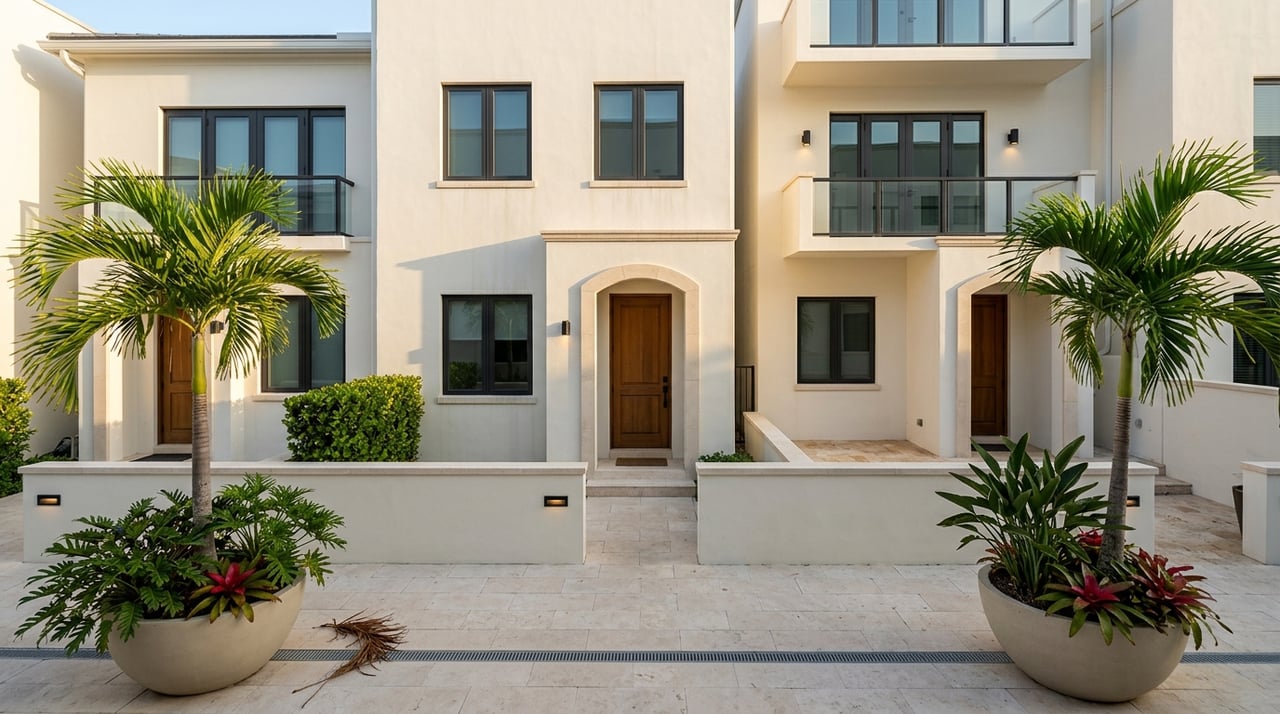
A townhome can be a strong fit if you want to enjoy Coconut Grove without taking on the full maintenance load of a detached property. If your ideal day includes walking to shops, dining, parks, or nearby amenities, a townhome near the village core may align well with that lifestyle.
Attached homes usually offer less land, but some still include features buyers want, such as private patios or gated settings. In exchange for a smaller footprint, you may gain a more convenient setup and a more manageable ownership experience.
Townhomes can also appeal if you are trying to enter Coconut Grove at a lower price point. In a neighborhood where detached homes often command a significant premium, that difference can open doors for buyers who want the location first and are comfortable with less yard space.
Townhome advantages to consider
- Lower entry point compared with many detached homes in Coconut Grove
- Less exterior maintenance responsibility in many communities
- Strong potential for a walkable, car-light daily routine
- Proximity to CocoWalk, parks, transit, and the village core in some locations
Townhome tradeoffs to review carefully
- Smaller lot size and less private outdoor space
- Shared walls can mean less privacy than a detached home
- HOA dues may apply
- HOA rules, fee increases, and special assessments can affect long-term costs
Why HOA Review Matters in Coconut Grove
If you are considering a townhome, the HOA deserves close attention. Fannie Mae notes that HOA boards typically set rules, collect fees, and maintain common areas, while the CFPB says dues are usually paid directly and can range from a few hundred dollars to more than $1,000 per month.
That monthly number is only part of the story. In a coastal market like Coconut Grove, you also want to understand reserve funding, the condition of shared systems, and the potential for special assessments. A townhome with reasonable dues may still carry future costs if the association is underfunded or major repairs are coming.
Before you move forward, review key documents carefully. The health of the association can shape your ownership experience just as much as the floor plan or finishes.
Questions to ask about a townhome HOA
- What do the monthly dues cover?
- Have dues increased recently?
- Are there current or planned special assessments?
- How well funded are reserves?
- What rules apply to exterior changes, pets, parking, or rentals?
When a Single-Family Home Makes Sense
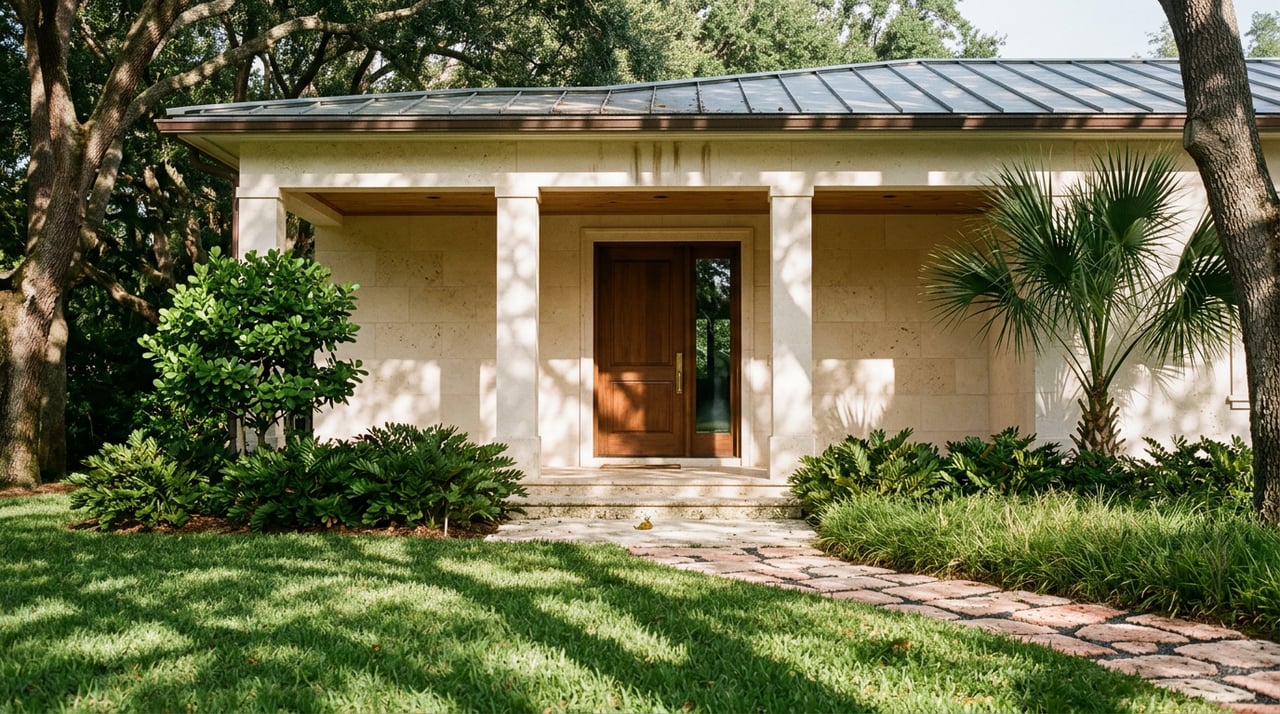
A single-family home is often the better fit if you want more privacy, more land, and more direct control over your property. In Coconut Grove, that can mean room for gardens, a pool, more separation from neighbors, or flexibility for future updates.
Local zoning and preservation rules help reinforce that detached-home appeal. Much of Coconut Grove falls within the City of Miami’s Neighborhood Conservation District overlay known as NCD-3, which is intended to preserve the area’s landscaped residential character, tree canopy, green space, architectural variety, and unique single-family context while limiting additional density and height.
That framework matters because it supports the qualities many buyers want from a detached home in the Grove. If your priorities include privacy, green space, and the feel of a low-density residential setting, a single-family home may be the stronger long-term match.
Single-family home advantages to consider
- More privacy than an attached home
- Larger outdoor areas in many cases
- Greater control over the property
- Better fit for buyers who value gardens, pools, or expansion potential
Single-family home tradeoffs to expect
- More owner responsibility for exterior upkeep
- More yard and drainage maintenance
- Typically a higher entry price in Coconut Grove
- More time and cost tied to ongoing maintenance
How Coconut Grove’s Character Shapes the Decision
In many neighborhoods, this choice comes down mostly to budget. In Coconut Grove, the neighborhood itself plays a larger role. The village core, leafy streets, marinas, parks, and retail areas create meaningful differences from block to block.
For example, if you want to walk to CocoWalk, enjoy nearby restaurants, and stay close to transit connections, a townhome near the core may be especially attractive. If you want a more tucked-away setting with mature landscaping and more private outdoor living, a detached home may better reflect what makes Coconut Grove special.
The City of Miami community page also notes multiple parks, a branch library, and several schools in and around the Grove. Those everyday amenities support livability across the neighborhood, whether you choose an attached or detached property.
Think Beyond Price Per Square Foot
It is easy to compare homes based on size and asking price, but that does not tell the full story in Coconut Grove. Two properties with similar square footage can offer very different ownership experiences depending on lot size, block location, flood exposure, and HOA structure.
For many buyers, the biggest decision variables are:
- Distance to the village core
- Privacy level
- Outdoor space
- HOA health and monthly dues
- Flood zone status
- Long-term maintenance burden
If you keep your focus on how you want to live rather than only what a property costs, the right fit usually becomes clearer.
Long-Term Value Considerations
Coconut Grove remains a high-end market. Realtor.com shows a median listing home price of about $2.8 million, and Redfin reports a median sale price of $2.6 million, so both townhomes and detached homes are part of a luxury market environment.
Within that setting, detached homes may benefit from the neighborhood’s land scarcity over time. The local preservation framework is designed to keep much of Coconut Grove low-density and tree-lined, which supports the limited-supply dynamic that often matters to buyers focused on long-term value.
Townhomes can still make excellent sense, especially for buyers who care more about convenience and location than lot size. But over time, townhomes may be more sensitive to association quality, fee growth, and the condition of shared systems. That is why due diligence is so important before you commit.
Flood Due Diligence Is Essential
No matter which property type you prefer, flood review should be part of your buying process in Coconut Grove. Miami-Dade County advises buyers to check an address using its flood-map tool and obtain an elevation certificate when needed.
This is especially important in a bayside neighborhood with shoreline parks and coastal exposure. Flood insurance may be required for government-backed mortgages in Special Flood Hazard Areas, and standard homeowners insurance typically does not cover flood damage.
A beautiful property and a strong location are only part of the picture. You also want clarity on flood zone status, insurance implications, and any property-specific risk factors before making an offer.
A Simple Way to Decide
If you are still weighing the two options, start with your daily lifestyle. The best choice usually comes from matching the property type to how you actually want to live in Coconut Grove.
A townhome may be the better fit if you want:
- Easier upkeep
- A lower entry point
- Walkability near the village core
- A lock-and-leave lifestyle
A single-family home may be the better fit if you want:
- More privacy
- More land and outdoor space
- Fewer shared rules and systems
- Greater long-term control over the property
In Coconut Grove, there is no one-size-fits-all answer. The right move depends on your priorities, your budget, and how you want your home to support your life in one of Miami’s most distinctive neighborhoods.
If you are comparing townhomes and homes in Coconut Grove and want thoughtful guidance tailored to your goals, Nancy Jimenez offers a concierge-level approach backed by deep local market knowledge, strategic advice, and high-touch support from search to closing.
FAQs
What is the main difference between townhomes and homes in Coconut Grove?
- Townhomes often offer a lower entry point and less exterior maintenance, while single-family homes usually provide more privacy, more land, and greater property control.
Are townhomes in Coconut Grove usually less expensive than single-family homes?
- Current market data suggests they often are, with townhomes showing a lower median listing price than detached homes in Coconut Grove.
Do Coconut Grove townhomes usually have HOA fees?
- Many townhomes are part of an HOA or similar association, so you should review dues, reserve funding, rules, and the possibility of special assessments before buying.
Why are single-family homes appealing in Coconut Grove?
- Many buyers choose detached homes for privacy, larger outdoor areas, pool or garden potential, and the neighborhood’s low-density, tree-lined residential character.
How important is flood-zone research for Coconut Grove properties?
- It is very important for both townhomes and single-family homes, and Miami-Dade County recommends checking the address in its flood-map tool and obtaining an elevation certificate when needed.
Is walkability better with a townhome in Coconut Grove?
- It can be, especially for townhomes near the village core, where you may be closer to CocoWalk, parks, dining, trolley service, and Metrorail connections.