Wondering whether bayfront or oceanfront living in Miami Beach is the better fit for your lifestyle? It is a smart question, because in this market, the view is only part of the story. If you are weighing daily beach access against boating convenience, or historic character against marina energy, this guide will help you compare what living on each side of Miami Beach actually feels like. Let’s dive in.
What Bayfront and Oceanfront Mean
Miami Beach sits on a barrier island with the Atlantic Ocean on the east and Biscayne Bay on the west. In simple terms, oceanfront usually means Atlantic-facing addresses, while bayfront usually means homes and condos facing Biscayne Bay or nearby waterways.
That geography shapes the day-to-day experience. Oceanfront living tends to center on the beach, the promenade, and a more public waterfront setting. Bayfront living usually leans toward marinas, boating access, broader west-facing water views, and sunset exposure.
Oceanfront Living in Miami Beach
If you picture stepping outside for a beach walk, hearing the surf, and having the ocean as part of your daily routine, oceanfront living may be the clearest match. Miami Beach has a seven-mile beach system along with lifeguards, beach-condition alerts, and water-quality advisories after rain.
One of the biggest lifestyle features is the Beachwalk. The city describes it as a nine-mile ADA-accessible oceanfront promenade running from South Pointe Park to 87th Street. For many buyers, that kind of direct pedestrian access is a major reason to choose the ocean side.
What daily life feels like
Oceanfront blocks often feel more connected to the public beach atmosphere. Miami Beach also reports more than 6,000,000 visitors per year, so you should expect more visitor activity in many ocean-facing areas, especially near major beach destinations.
That added energy can be a plus if you want a vibrant setting. It can also be a tradeoff if you prefer a more tucked-away waterfront routine. Much depends on the exact building, block, and neighborhood.
Oceanfront design and character
In South Beach, oceanfront areas often have a more historic feel than many buyers expect. Miami Beach says its historic districts include more than 2,600 buildings, with 70% categorized as contributing or historic, including areas around Ocean Drive and Flamingo Park.
That helps explain why some oceanfront sections feel lower-rise and architecturally distinctive instead of purely tower-driven. You may see a mix of Art Deco, Mediterranean Revival, MiMo, and contemporary buildings depending on the location.
Historic district considerations
If you are considering an older oceanfront property, preservation review may matter. The city’s Historic Preservation Board can recommend designation and review certain alterations or demolition in historic districts.
For buyers, that does not automatically mean a problem. It simply means the ownership experience may include additional design oversight compared with a newer building outside a historic setting.
Bayfront Living in Miami Beach
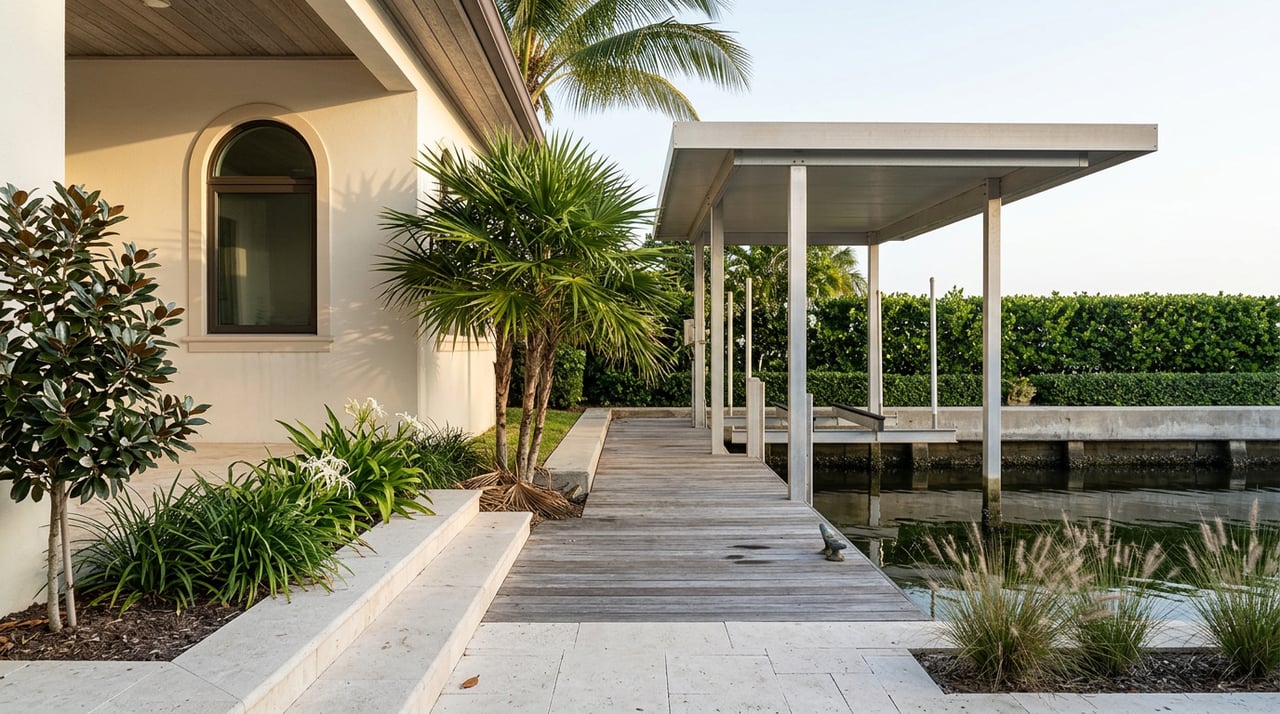
Bayfront living usually appeals to buyers who want the water to feel more connected to boating, marinas, and sunset views. Instead of direct sand access, you are often paying for a different kind of waterfront experience.
In practice, the bay side can feel more tied to launch access and marina convenience. The city’s Maurice Gibb Boat Ramp is reserved for Miami Beach residents and serves motorized vessels, which reinforces how boating is part of the bayfront lifestyle.
What daily life feels like
If your ideal morning involves the marina instead of the beach, bayfront may feel like the better fit. Many buyers are drawn to calmer water views, western exposure, and the rhythm of boats moving through Biscayne Bay and nearby waterways.
That experience can feel more residential in some pockets, though it still varies widely by neighborhood. The right bayfront property often comes down to how close you want to be to marinas, dining, and walkable city amenities.
Bayfront walkability may surprise you
Some buyers assume bayfront means less walkable, but that is not always true in Miami Beach. While the ocean side has the Beachwalk, the city also operates a free trolley about 15 hours a day at roughly 20-minute intervals.
The South Beach route connects restaurants, marinas, parks, Lincoln Road Mall, the Convention Center, and other civic destinations. Areas like Sunset Harbour can therefore feel more walkable and connected than buyers initially expect.
Design Tradeoffs on Both Sides
The water view is only one part of the product in Miami Beach. The city’s Oceanfront and Bayfront design guidelines call for view, light, and breeze corridors, discourage long continuous walls along the beach, and encourage varied building forms and stepped rooflines.
For oceanfront projects, the city also requires a dune-district landscape plan and open walkways where possible. In practical terms, that means openness, airflow, and how a building meets the street can influence the living experience just as much as the water itself.
Because of this design framework, both bayfront and oceanfront areas can include a mix of older character properties and newer towers. The key is to evaluate the specific building, orientation, and neighborhood context instead of assuming one label tells the whole story.
Miami Beach Pricing Is Hyperlocal
One of the biggest mistakes buyers make is assuming oceanfront always costs more than bayfront. In Miami Beach, recent market snapshots show that micro-location often matters more than the bayfront or oceanfront label alone.
For example, Ocean Front posted a May 2026 median listing price of $745,000, with 501 homes for sale, a median 106 days on market, and a 94% sale-to-list ratio. Realtor.com categorized it as a buyer’s market.
Bayshore posted a March 2026 median listing price of $1.33 million, with 112 homes for sale, a median 108 days on market, and a 93% sale-to-list ratio. That was also categorized as a buyer’s market.
At a more premium level, Sunset Harbour showed a May 2026 median listing price of $1.45 million with only 20 homes for sale and a balanced market. South Pointe showed a May 2026 median listing price of $1.23 million, with $1,241 per square foot, 199 homes for sale, a 97-day median market time, and a 95% sale-to-list ratio.
What those numbers mean for you
These snapshots show that some bayfront pockets can price above some oceanfront neighborhoods. They also show that certain oceanfront areas can still command very high price per square foot.
At the top end, the MIAMI Realtors Q1 2026 report placed Miami Beach luxury condos at $5.5 million and ultra-luxury condos at $14.0 million. That is why buyers should focus on view quality, building quality, floor height, layout, and scarcity, not just the waterfront label.
Flood and Insurance Should Be Part of the Decision
If you are comparing premium waterfront homes or condos in Miami Beach, flood risk and insurance should be part of your decision from the start. The city says 93% of properties are in a FEMA Special Flood Hazard Area.
The city also notes that flood insurance is required for federally backed mortgages in these areas. On the positive side, Miami Beach’s Community Rating System saves residents and businesses 25% on flood insurance premiums.
For buyers, the practical takeaway is simple. You should treat insurance, elevation, and stormwater exposure as part of the ownership cost and not as an afterthought.
Which Lifestyle Fits You Best?
For many buyers, the easiest way to decide is to think about how you will use the home most often. If the property is meant to be a beach-and-promenade retreat, oceanfront usually makes more sense.
If the property is meant to be a boating-and-sunset base, bayfront is often the better fit. When the lifestyle and the location line up, the premium tends to feel justified.
Choose oceanfront if you value
- Direct beach access
- Regular walks on the Beachwalk
- Ocean views and surf-oriented energy
- A location tied closely to the public beach experience
- In some areas, more historic architectural character
Choose bayfront if you value
- Marina proximity and boating convenience
- Sunset-facing water views
- A calmer waterfront setting in the right pocket
- Access to bay-oriented neighborhoods like Sunset Harbour
- A lifestyle centered more on the waterway than the sand
The Right Choice Is Personal
There is no universal winner in the bayfront versus oceanfront debate in Miami Beach. The better option is the one that matches your routine, your priorities, and the kind of waterfront experience you actually want to use.
That is especially true in a market where one bayfront neighborhood can outperform an oceanfront area on price, and one oceanfront building can offer a completely different lifestyle from the next block over. A thoughtful, property-by-property approach is what leads to the best result.
If you want tailored guidance on Miami Beach waterfront condos, luxury homes, or a relocation move within Miami-Dade, Nancy Jimenez offers a concierge-level approach with the local market insight and hands-on support to help you buy with confidence.
FAQs
What is the difference between bayfront and oceanfront living in Miami Beach?
- Bayfront living usually means homes or condos facing Biscayne Bay or nearby waterways, while oceanfront living usually means Atlantic-facing addresses with direct connection to the beach side of Miami Beach.
Is oceanfront or bayfront more expensive in Miami Beach?
- Not always one or the other. Recent market snapshots show that pricing depends heavily on micro-location, building quality, views, floor height, and scarcity, not just whether a property faces the bay or the ocean.
Is bayfront living in Miami Beach good for boaters?
- In many cases, yes. Bayfront living is generally the more natural fit for buyers who want marina access, boating convenience, and a water-focused routine tied to Biscayne Bay.
Is oceanfront living in Miami Beach more walkable?
- Oceanfront areas have a major walkability advantage through the Beachwalk, but some bayfront neighborhoods, including Sunset Harbour, can also feel highly connected thanks to nearby amenities and the city’s free trolley service.
What should buyers know about flood risk in Miami Beach waterfront areas?
- Miami Beach says 93% of properties are in a FEMA Special Flood Hazard Area, so buyers should factor flood insurance, elevation, and stormwater exposure into the overall cost of owning a waterfront property.
How do I choose between bayfront and oceanfront property in Miami Beach?
- A simple way to decide is to match the home to your main use case: choose oceanfront if you want a beach-and-promenade lifestyle, and choose bayfront if you want a boating-and-sunset lifestyle.