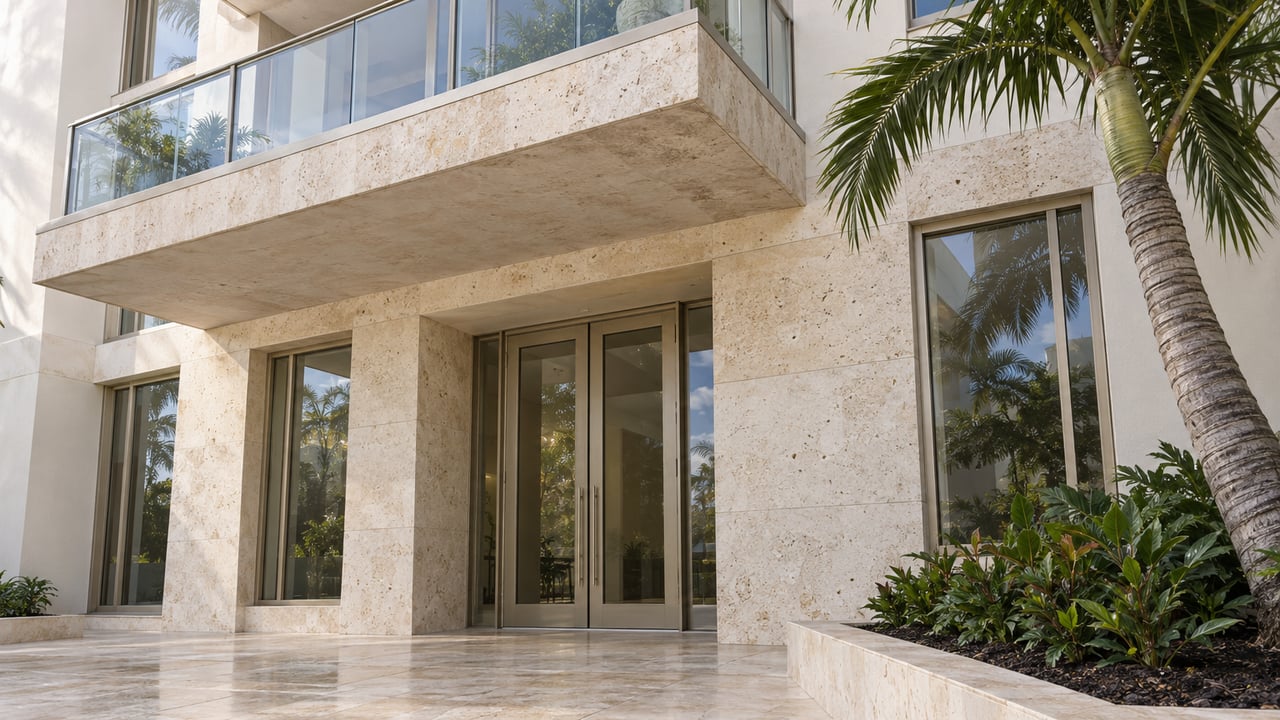
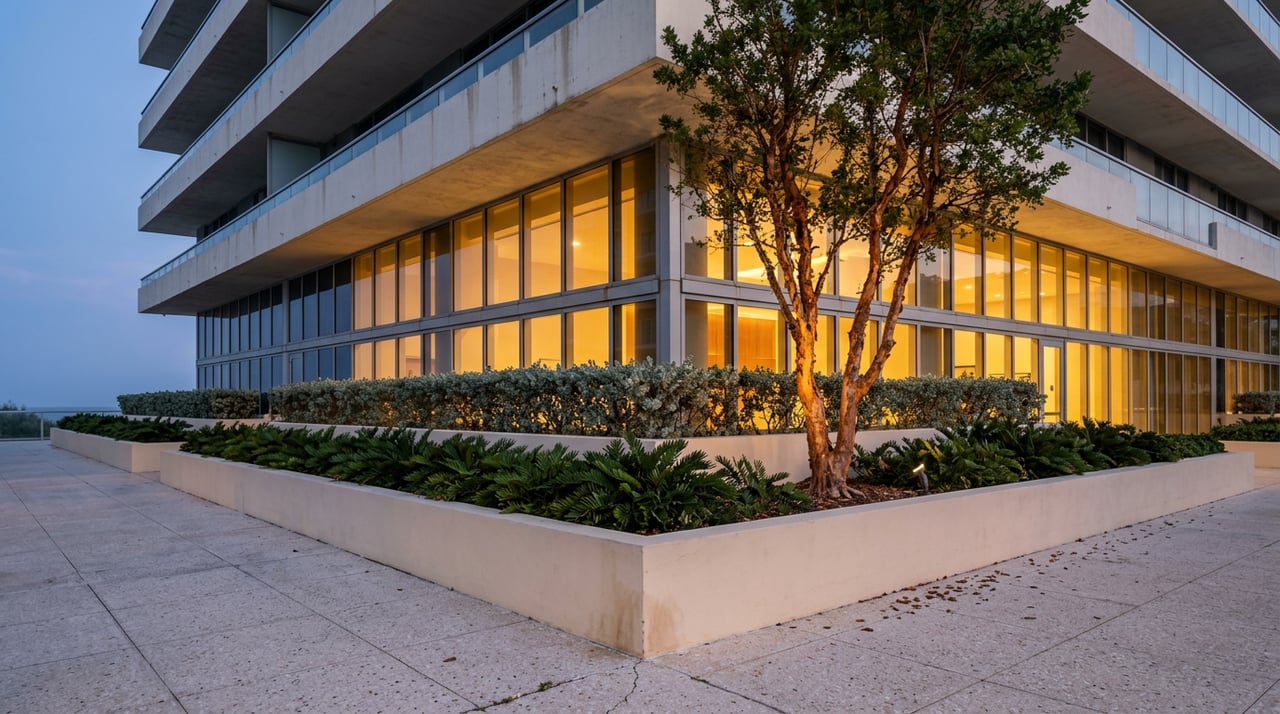
The listing sheet for 7 Indian Creek Island Road never included a certificate of occupancy. It couldn't. When Mark Zuckerberg and Priscilla Chan closed on the property on March 2, 2026, for a reported $170 million, the largest residential sale in Miami-Dade County history, they bought a house that had never been lived in and was not yet legally finished. Renderings promised nine bedrooms, fifteen bathrooms, a 1,500-gallon aquarium, and a library with a hidden passageway. None of it existed in occupiable form on closing day.
That detail is easy to treat as a footnote. It is actually the story. Buyers who assume the $170 million figure describes finishes, square footage, or bragging rights are reading the wrong number. What that sale actually priced was time, and understanding why changes how both sellers and buyers should think about every transaction on this particular island.
What a comparable sale says the land alone was worth
Indian Creek has only 41 buildable home sites on roughly 300 acres of filled land in Biscayne Bay, a footprint that has been fixed for generations. The village was incorporated in 1939, and the island has not grown an inch since. No developer can add a lot. No rezoning creates more waterfront. When a parcel changes hands, the price reflects a supply that is permanently fixed, which is a different kind of scarcity than most luxury markets deal with.
That scarcity has a number attached to it. In mid-2025, a 1.8-acre waterfront lot at 9 Indian Creek Island Road sold for $105 million, up from $27.5 million when it last traded in 2018. The parcel sits adjacent to a compound Jeff Bezos has been assembling on the island since 2023, where he has spent a reported $234 million across three properties totaling 6.4 acres. Land alone, before a single foundation is poured, was already worth nine figures.
Set that beside the Zuckerberg parcel. The sellers had acquired the same two-acre site in 2020 for roughly $30 million. By the time they sold an unfinished, permitted, actively-under-construction estate designed by Ferris Rafauli on 80,000 square feet of land with 200 feet of bay frontage, the price had grown more than fivefold, even though the house wasn't done.
The premium wasn't for the aquarium
Here's where the obvious story breaks down. If buyers were paying for finishes, an incomplete house should sell at a discount to a comparable finished one. On Indian Creek, it's the opposite.
Building a serious residence on the island runs roughly one year for design and permitting and another three for construction, according to agents active in the market. That four-year runway is itself a cost, one measured in carrying expenses, opportunity cost, and the simple fact that a buyer with $170 million to spend does not want to spend four more years waiting to live somewhere. A mid-build acquisition collapses that entire runway into whatever time remains on the existing contractor's schedule.
So the price on 7 Indian Creek Island Road wasn't land plus bricks. It was land, plus a permit set already approved by the village, Miami-Dade County's environmental resources department, and any required seawall and dock review, plus a construction schedule already three years deep. The buyer paid to skip the calendar, not to acquire a finished aquarium.
That reframes the earlier $120 million record, a Star Island estate sold by developer Vlad Doronin in 2025, in a useful way. Both trophy sales, on different islands, cleared the prior benchmark by wide margins. But the mechanism behind each number is different, and a seller who doesn't know which one applies to their property is negotiating blind.
The market floor tells its own story
Since mid-2023, no arm's length sale on Indian Creek has closed below $64 million. That floor is worth sitting with. It isn't a median, and treating it like one misses the point. A median implies a distribution of typical transactions. Indian Creek has 41 lots total and a handful of sales in any given year. There is no "typical" transaction, only a scarcity price that every seller is implicitly setting a floor against, whether they intend to or not.
Roughly half of Indian Creek's sales never reach that visible floor at all. They happen off-market, worked quietly through relationships rather than syndicated listings, according to a Corcoran Group agent who has worked the island. An owner who starts thinking about selling often finds offers arriving before a listing exists, precisely because the pool of buyers who want this specific address is small enough that word travels faster than marketing ever could.
For a seller, that changes the calculus entirely. The comparable sale that should inform your asking price might never have appeared on any portal. The buyer pool isn't shopping listings. It's watching the island.
What this actually means for a seller weighing timing
| Cost component | What it reflects | Approximate figure |
|---|---|---|
| Land basis, comparable 80,000 sq ft western-side parcel | Fixed scarcity, no new supply possible | Roughly $105 million (2025 comparable) |
| Raw lot to near-finished home, same frontage | Discount for buying unbuilt vs. buying built | Roughly $65 million spread (2025-2026) |
| Everything above land basis | Design, permit progress, construction completion, timeline compression | The remainder of the $170 million total |
The practical takeaway isn't that every seller should list mid-construction. It's that a seller who understands this math can make a deliberate choice about when to bring a property to market, rather than defaulting to convention. Listing a finished spec home invites buyers to comparison-shop finishes against other finished homes. Listing a permitted, partially-built estate on scarce frontage invites a different kind of buyer, one who is solving a scheduling problem and will pay for the years they don't have to wait.
It also means the contract itself has to be built differently. A sale structured around construction status carries representations and warranties tailored to what has and hasn't been completed, not a standard residential form. A Florida real estate attorney and a title company with experience closing high-value, in-progress island properties matter more here than almost anywhere else in South Florida, because the paperwork has to match a physical reality that is still changing.
The takeaway for a buyer comparing trophy addresses
If you're comparing Indian Creek to Star Island, Fisher Island, or any other ultra-prime enclave, the median price you find on a portal search is close to meaningless. What you're actually pricing is three separate things: the land's fixed scarcity, whatever construction progress exists on it, and how much of the four-year design-to-move-in runway you're willing to pay to skip. Two properties with identical square footage can carry wildly different prices depending on where each one sits in that build cycle.
That's the piece the headline number never shows you. A $170 million sale and a $64 million sale on the same island aren't two points on a single scale. They're answers to different questions about how much time and how much frontage a specific buyer needed to buy at that moment.
FAQ
Are Indian Creek listings available through a standard MLS search? Some are, but agents active in the market estimate roughly half of transactions happen off-market, meaning the visible listing inventory understates real activity and true demand.
Why would a buyer purchase a home before it has a certificate of occupancy? To acquire the property at whatever point it sits in the design-permit-construction cycle, which can compress a four-year timeline into however much work remains, at a price that reflects both the land and the progress already made.
Does Indian Creek's fixed lot count mean prices can only rise? No individual sale guarantees future direction. What the fixed 41-lot count does mean is that supply cannot expand to meet demand the way it can in most markets, which is a structural fact worth understanding regardless of where any single transaction lands.
If you're weighing a purchase or a sale on Indian Creek, or comparing it against another Miami-Dade trophy address, the math above is the starting point, not the whole conversation. Nancy Jimenez works this tier of the market directly and can walk you through what a specific parcel, permit set, or construction timeline is actually worth before you make an offer or set an asking price. Let's Connect.